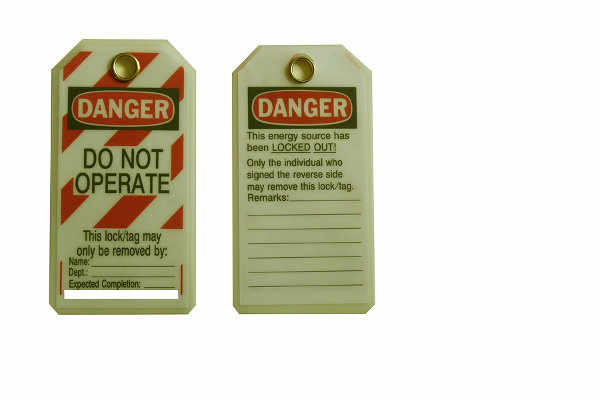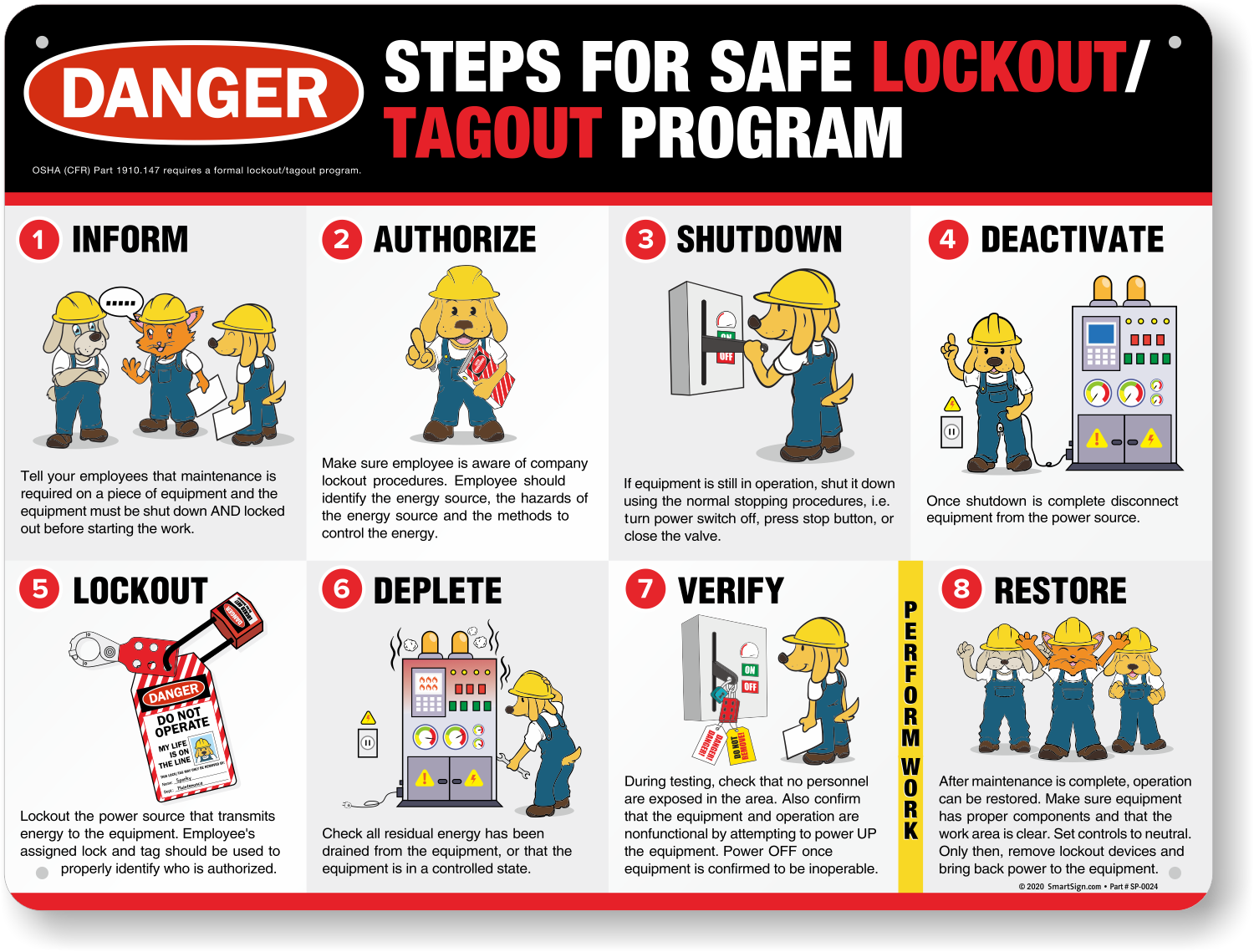
A worker reaches into a jammed conveyor belt without verifying the power source is isolated. Seconds later, an automatic restart causes catastrophic injury. Investigations reveal a missing piece—not a lock or tag, but a lock out tag out sign that could have stopped the sequence of failure. This scenario isn’t rare. It’s the consequence of underestimating a simple but powerful tool: visible, unambiguous safety communication.
A lock out tag out sign isn't decorative. It’s a final, visual checkpoint in an energy control procedure that separates a safe workplace from a potential fatality. While locks physically prevent equipment startup and tags identify who locked it and why, signs communicate broader warnings, procedures, and compliance requirements to everyone on site—even those unfamiliar with a specific machine.
This article breaks down why lock out tag out signs matter, how to implement them effectively, and where most organizations fail—even when they believe they’re compliant.
What Is a Lock Out Tag Out Sign?
A lock out tag out sign is a visual safety device used during energy control procedures to warn personnel that equipment is undergoing maintenance or servicing and must not be operated. Unlike individual tags attached to lockout devices, signs are typically posted in prominent locations near machinery, control panels, or entry points to hazardous areas.
They serve three primary functions: - Warning: Alerting workers that equipment is de-energized and under control. - Instruction: Providing step-by-step guidance on lockout procedures. - Accountability: Reinforcing that bypassing the system is a violation of safety policy.
These signs often accompany formal Lockout/Tagout (LOTO) programs required under OSHA standard 29 CFR 1910.147. However, many companies treat them as an afterthought—printed once, laminated, and forgotten. That’s a dangerous oversight.
Why Signs Are More Than Just Compliance
OSHA requires that employers use tags and signs as part of an energy control program. But regulation is only one reason to invest in high-quality, well-placed signage.
The Human Factor in Safety
People respond to visuals faster than text. A brightly colored sign with bold symbols can stop someone from approaching a hazardous machine before they even read the words. In high-noise environments or multilingual workplaces, this is critical.
Consider a maintenance technician finishing up on a hydraulic press. They’ve applied their lock, attached their tag, and walked away. Another team member unfamiliar with the work sees the machine idle and assumes it’s safe to restart. Without a lock out tag out sign clearly stating “DO NOT OPERATE – MAINTENANCE IN PROGRESS,” the assumption becomes a deadly mistake.
Signs bridge gaps in knowledge, language, and situational awareness.
Reinforcing a Culture of Accountability
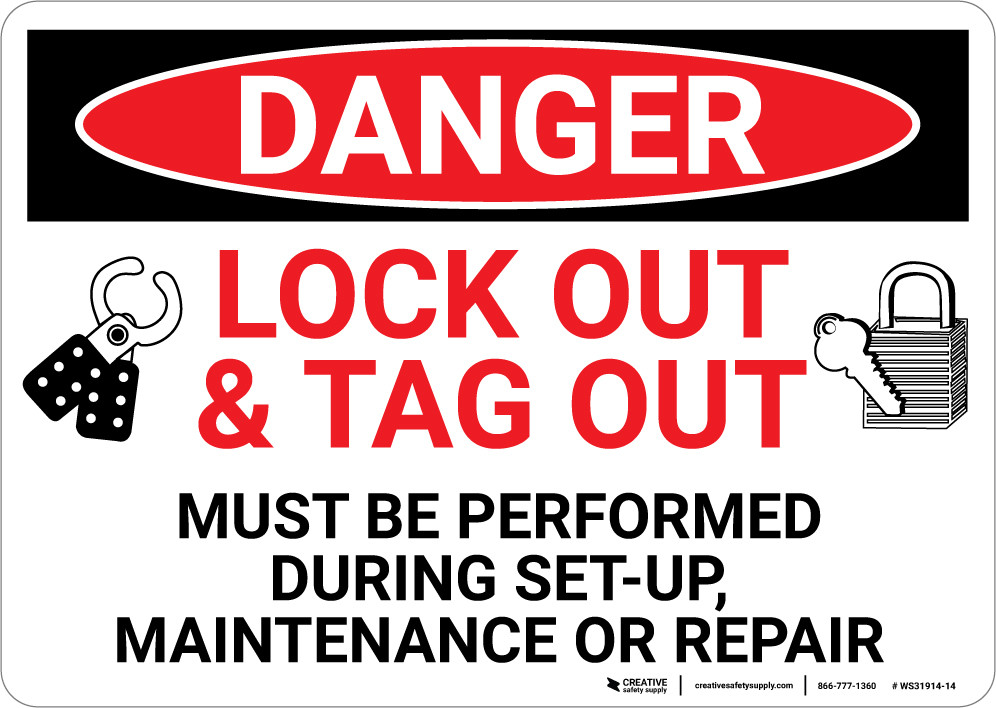
A visible sign sends a message: safety isn’t optional. It’s monitored, enforced, and expected. When signs are standardized across a facility, they create consistency. Workers learn to look for them. Supervisors use them during audits. New hires recognize them as part of the site’s safety DNA.
They also protect the employer. In the event of an incident, documented, visible signage demonstrates due diligence in hazard communication.
Common Types of Lock Out Tag Out Signs
Not all signs serve the same purpose. Effective LOTO programs use multiple sign types tailored to context.
| Sign Type | Purpose | Best Placement |
|---|---|---|
| Warning Signs | Alert that equipment is locked out | On machine housing, control panels |
| Procedure Signs | Display step-by-step lockout instructions | Near lockout stations or breaker rooms |
| Group Lockout Boards | Track multiple locks during team maintenance | Central maintenance area |
| Out-of-Service Signs | Indicate equipment is temporarily disabled | On valves, switches, or isolation points |
| Compliance Reminder Signs | Reinforce LOTO policy and consequences | Break rooms, entrances, safety boards |
Real-World Example: Chemical Plant Valve Isolation
At a Midwest chemical processing facility, operators must isolate valves before pipeline maintenance. Each valve has a standardized lock out tag out sign with: - A pictogram of a lock and hand - Text: “Valve Isolated – Do Not Open – See Maintenance Log” - A QR code linking to the current work permit
This system reduced unauthorized re-energization incidents by 92% in 18 months. The sign didn’t just warn—it connected to digital workflows, making safety traceable and verifiable.
How to Design Effective Lock Out Tag Out Signs
A poorly designed sign is as dangerous as no sign at all. Faded text, confusing symbols, or cluttered layout defeat the purpose.
Design Principles That Work
- High Contrast Colors
- Use ANSI-standard safety colors: red for danger, yellow for caution, orange for warnings. Black-and-white signs get ignored.
- Clear, Concise Language
- Avoid jargon. Use short sentences: “Machine Locked Out – Contact John Doe Before Starting.”
- Pictograms Over Text
- Symbols like a lock, hand stop, or flashing bolt are universally understood. OSHA and ISO standards provide approved icons.
- Weather and Wear Resistance
- Indoor signs can be laminated paper. Outdoor or industrial zones need aluminum, vinyl, or polycarbonate.
- Strategic Placement
- Signs must be visible before a worker reaches the hazard. That means eye-level, unobstructed, and near energy-isolating devices.
The Mistake Everyone Makes
Companies often buy generic “Danger – Do Not Operate” signs from online retailers and slap them on every machine. But one-size-fits-all signage fails because it lacks context.
A CNC lathe in a machine shop has different energy sources (electrical, hydraulic, pneumatic) than a boiler in a power plant. The sign should reflect the hazard type, isolation method, and point of contact.
Customization isn’t overkill—it’s precision safety.
Integrating Signs into Your LOTO Program
A sign alone won’t protect anyone. It must be part of a documented, practiced, and audited energy control program.
Key Integration Steps
- Conduct an Energy Source Audit
- Identify every machine with hazardous energy (electrical, mechanical, thermal, chemical, etc.).
- Develop Machine-Specific Procedures
- Include which isolation points need locking, which tags apply, and where signs must be posted.
- Train Employees on Sign Meaning and Use
- Training isn’t a one-time event. Refresher courses should include sign recognition.
- Audit Regularly
- Monthly checks should verify signs are present, legible, and correctly placed.
- Update for Changes
- New equipment? Modified process? Update signs accordingly.
Red Flags Your Signs Aren’t Working
- Workers bypass locked equipment because “the sign didn’t say who to call”
- Signs are faded, torn, or covered by grease
- Different departments use different formats
- No signs near group lockout stations
If any of these exist, your LOTO program has a critical vulnerability.
Choosing the Right Lock Out Tag Out Sign System
Off-the-shelf signs are convenient, but a strategic approach yields better results. Here are five proven options, each suited to different environments:
| Product | Best For | Key Features |
|---|---|---|
| Brady LOTO-2000 Sign System | Heavy manufacturing | Durable vinyl, customizable templates, OSHA-compliant icons |
| Grainger Industrial Safety Signs | Mid-sized facilities | Wide catalog, quick shipping, ANSI-compliant |
| Seton LOTO Procedure Boards | Team maintenance | Magnetic boards with lock reels and sign inserts |
| Justrite Safety Compliant Kits | Chemical and lab environments | Corrosion-resistant, bilingual options, spill-resistant |
| Custom In-House Design (via Canva + Print Service) | Unique workflows | Full control over layout, integration with internal systems |
For maximum impact, pair physical signs with digital tools. QR codes on signs can link to digital LOTO logs, video instructions, or real-time status dashboards.
The Cost of Skipping the Sign
It’s tempting to assume that locks and tags are enough. But signs are the final layer of defense.
In 2022, an OSHA investigation at a Pennsylvania food processing plant found that a worker was injured when a mixer restarted during cleaning. The technician had used a lock, but no lock out tag out sign was posted. Other employees assumed the machine was safe. OSHA fined the company over $75,000, citing failure in “effective hazard communication.”
The lock worked. The tag was attached. But the absence of a visible sign broke the safety chain.
This isn’t just about fines. It’s about trust. Workers need to believe the system protects them—even when they’re not the ones who applied the lock.
Make Your Lock Out Tag Out Sign Work for You
A lock out tag out sign is not a formality. It’s a frontline defense against human error, miscommunication, and procedural drift. Whether you manage a warehouse, factory, or utility plant, treat your signage with the same rigor as your locks and training.
Start here: - Audit your current signs. Are they visible, legible, and accurate? - Customize them to match equipment and procedures. - Train teams to respect and verify signage. - Integrate with digital systems where possible.
Safety isn’t just about what you lock—it’s about what everyone sees.
FAQ
What should you look for in Lock Out Tag Out Sign: Why It’s Critical for Safety Compliance? Focus on relevance, practical value, and how well the solution matches real user intent.
Is Lock Out Tag Out Sign: Why It’s Critical for Safety Compliance suitable for beginners? That depends on the workflow, but a clear step-by-step approach usually makes it easier to start.
How do you compare options around Lock Out Tag Out Sign: Why It’s Critical for Safety Compliance? Compare features, trust signals, limitations, pricing, and ease of implementation.
What mistakes should you avoid? Avoid generic choices, weak validation, and decisions based only on marketing claims.
What is the next best step? Shortlist the most relevant options, validate them quickly, and refine from real-world results.