Every year, preventable machinery accidents occur because workers bypass lockout tagout (LOTO) procedures—or never fully understand them. These aren’t just compliance failures; they’re breakdowns in communication, training, and routine safety culture. Safety meetings are where that culture is built, tested, and reinforced. Yet too many LOTO meetings rely on scripted lectures that fail to engage or educate.
The best lockout tagout safety meetings don’t just review policy—they connect procedures to real work, real risks, and real consequences. They’re interactive, scenario-based, and grounded in the actual equipment and workflows of the team. This article outlines high-impact LOTO safety meeting topics that go beyond the basics to create lasting awareness and behavior change.
Why Lockout Tagout Safety Meetings Matter
A LOTO program only works when everyone involved understands not just how to apply a lock, but why it’s non-negotiable. OSHA estimates that proper lockout tagout practices prevent 120 fatalities and 50,000 injuries annually. Yet violations of the Control of Hazardous Energy standard (29 CFR 1910.147) consistently rank among the top ten most frequently cited violations.
Safety meetings are where confusion gets cleared up, assumptions are challenged, and muscle memory is built. When done right, they shift LOTO from a box-ticking exercise to a core operating principle.
A common mistake? Treating LOTO meetings as one-size-fits-all. A maintenance technician servicing a conveyor system faces different risks than a janitorial worker cleaning near powered equipment. Effective meetings segment audiences and tailor examples.
1. Reviewing the Energy Control Plan: Who, What, and When
Every facility must have a written energy control program. But how many workers have actually read it? Use a safety meeting to walk through key sections: equipment-specific procedures, authorized vs. affected employees, and shutdown sequences.
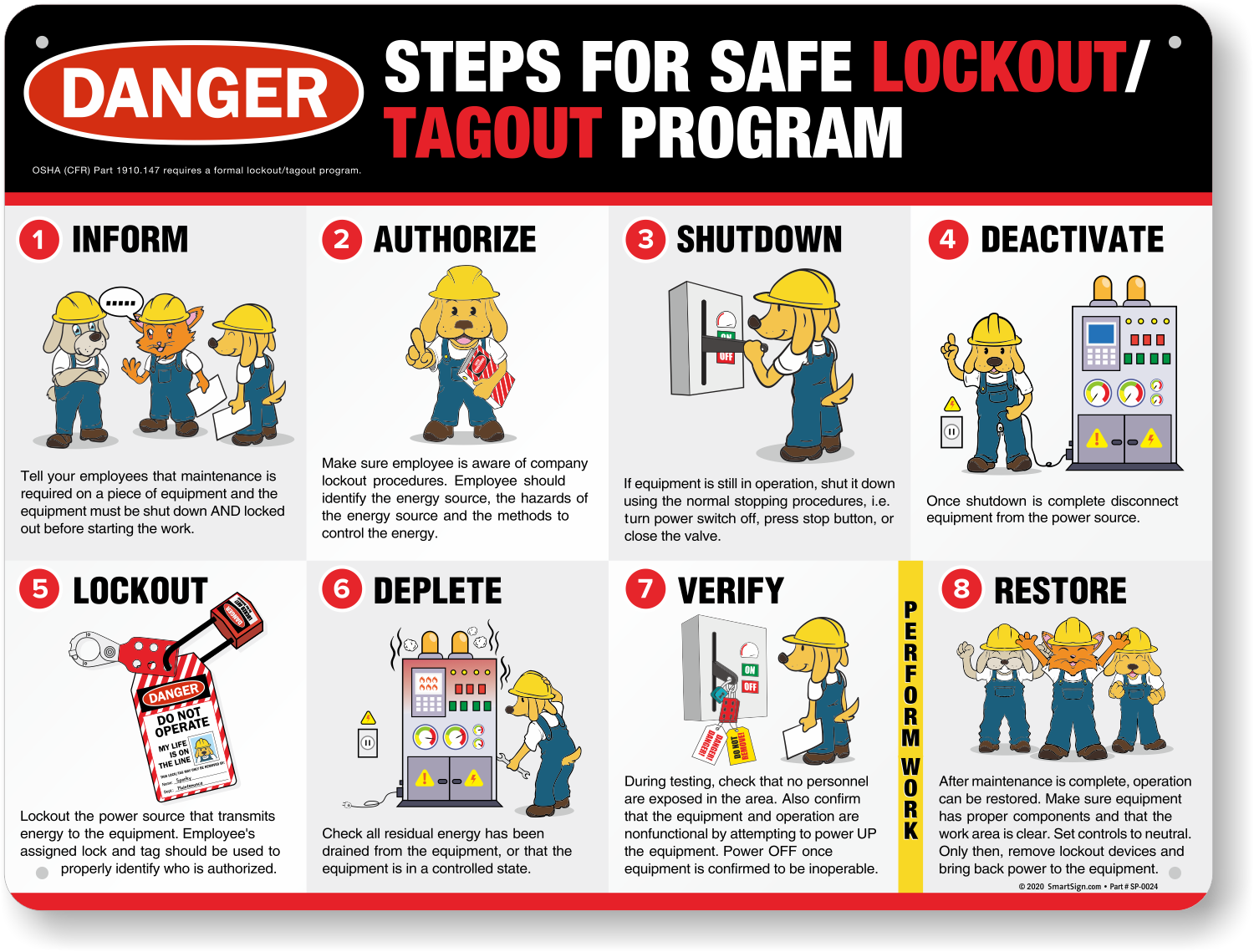
Practical example: Bring a printed LOTO procedure for a common machine—say, a hydraulic press. Have a team member walk through each step out loud: isolating power, verifying disconnect, applying locks, testing for zero energy. Then ask: “What if the lock was missing? What if the valve wasn’t fully closed?”
This isn’t about testing knowledge—it’s about revealing gaps in real time.
Common mistakes to highlight: - Assuming a machine is off because it’s not running (ignoring stored energy) - Using personal locks without proper training - Skipping verification steps after lock application
Use a checklist format to reinforce: - Identify all energy sources (electrical, pneumatic, hydraulic, thermal, gravitational) - Isolate each source using approved disconnects - Apply lockout device and personal lock - Release or block stored energy - Verify zero energy state
When workers help build the checklist, they’re more likely to follow it.
2. Understanding Authorized vs. Affected Employees
One of the most misunderstood aspects of LOTO is the difference between authorized and affected employees.
- Authorized employees perform servicing or maintenance and must apply locks and follow full procedures.
- Affected employees operate or use the equipment but don’t service it. They must understand the purpose of LOTO and not attempt to restart locked-out machines.
Workplace scenario: A production worker sees a machine locked out and assumes it’s broken. They try to "help" by removing the lock and hitting the start button. This is not uncommon—and it’s deadly.
In your meeting, role-play this situation. Ask: What should the worker have done? Who should they have notified? Emphasize that no one removes a lock except the person who applied it, except under strict transfer procedures.

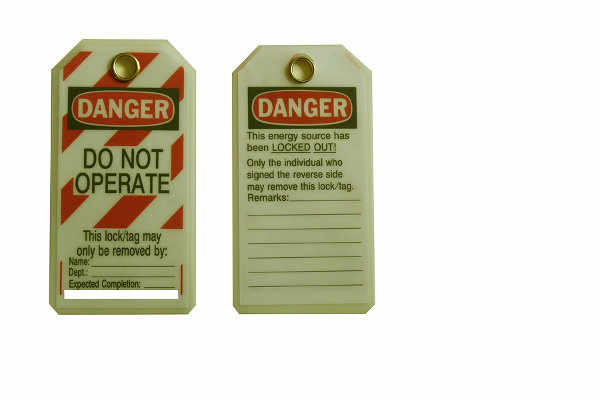
Include a quick quiz: - Can a supervisor remove a lock if the employee is on break? (No) - Can a tag alone be used instead of a lock? (Only if a lock is not physically possible, and strict alternative protections are in place)
Clarifying roles prevents overreach and keeps accountability clear.
3. Machine-Specific LOTO Procedures: Beyond the Manual
Generic LOTO training doesn’t stick. Workers need to see how the process applies to the machines they interact with daily.
Devote a meeting to a single high-risk machine—like a packaging line, boiler, or robotic arm. Break down its energy sources and walk through the exact LOTO steps.
Real use case: A food processing plant held a LOTO meeting focused solely on their slicer machine. They discovered that while the main power was locked out, the spring tension mechanism still posed a crushing hazard. The team updated the procedure to include a mechanical block.
This kind of focused session does more than inform—it builds ownership. Workers start asking: What about this valve? Is that capacitor fully discharged?
Action tip: Rotate focus machines monthly. Document updates and file them in the energy control plan.
4. Stored Energy: The Hidden Killer
Many LOTO failures happen not because of electricity, but because of overlooked stored energy: pressurized air, elevated parts, hot surfaces, or chemical potential.
Example: A technician locks out a compressor but doesn’t bleed the air lines. When they open the housing, residual pressure causes a sudden release, injuring their hand.
Use visuals or demonstrations to show how stored energy works: - Hydraulic systems holding pressure - Flywheels that continue spinning - Gravity-fed chutes with suspended loads
Training drill: List five machines in your facility. For each, ask the team: What kind of stored energy does this have? How is it safely released?
This transforms passive listening into active problem-solving.
Also address environmental factors: extreme temperatures can affect lock materials; moisture can compromise electrical isolation. LOTO isn’t just mechanical—it’s contextual.
5. Group Lockout Scenarios: Who Leads, Who Follows?
Multiple workers on one machine complicates LOTO. That’s where group lockout procedures come in.
The key concept: one person is designated the "primary authorized employee" who coordinates the lockout, applies a group lockbox, and ensures all individual locks are attached before work begins.
Common pitfall: Team members assume someone else locked out a secondary energy source. No single person takes full responsibility.
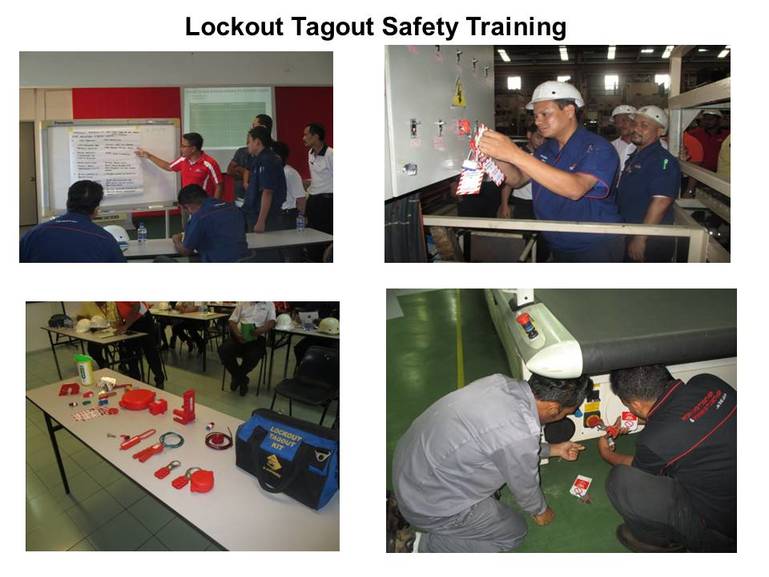
In your meeting, simulate a group lockout: - Assign roles: primary, support technicians, verifier - Walk through placing locks on different energy points - Use a lockbox to collect personal locks - Practice verifying zero energy together
Emphasize communication: the primary must confirm all workers are clear before re-energizing.
This builds procedural discipline and reduces finger-pointing during audits.
6. Shift Transfers and Lockout Continuity
What happens when a maintenance job spans shifts? Locks must stay on, but accountability must transfer.
OSHA allows for shift changeouts under strict conditions: - The oncoming authorized employee arrives before the outgoing one removes their lock - Both meet at the machine - The incoming employee applies their lock before the outgoing removes theirs - The交接 (handover) is documented
Real incident example: At a paper mill, a night technician left a locked machine without confirming the day technician was present. The lock was mistakenly removed by a supervisor, leading to a startup during repair. A near-miss became a written warning—but it could’ve been worse.
Role-play the correct transfer in your meeting. Ask: What if the incoming worker is late? What if communication fails?
The answer: delay the handover. Never compromise the sequence.
7. Common LOTO Violations—and How to Avoid Them
Even experienced workers make mistakes. Highlight real violations observed in audits or near-misses.
| Violation | Risk | Prevention |
|---|---|---|
| Using a single lock for multiple energy sources | Incomplete isolation | One lock per energy point |
| Tag-only isolation without lock | Easy to bypass | Use only when lock impossible |
| Failing to verify zero energy | False assumption of safety | Always test—don’t trust |
| Removing someone else’s lock | Unauthorized re-energizing | Personal locks only |
| Skipping LOTO for "quick fixes" | Underestimating risk | No job is too small |
Display this in the break room or include in meeting handouts. Make it visible, not theoretical.
8. Engaging Workers: Make LOTO Meetings Interactive
The most effective safety meetings are not monologues. They involve participation.
Try these formats: - LOTO Jeopardy: Categories like "Energy Types," "Procedures," "Roles" - Photo Quiz: Show images of correct and incorrect lockout setups—ask the team to spot errors - "What Would You Do?": Present real scenarios and discuss responses - Blindfolded Drill: Have a worker apply a lock while another guides them verbally—emphasizes clarity in procedures
When workers teach each other, retention increases. Assign a team member to lead part of the next meeting.
9. Auditing and Continuous Improvement
OSHA requires annual inspections of LOTO procedures. But audits shouldn’t be annual surprises.
Use safety meetings to preview the audit process: - A trained observer will watch a real lockout - They’ll check compliance with each step - They’ll interview the worker afterward
Tip: Conduct internal mini-audits quarterly. Rotate auditors from different shifts. Share findings in the next meeting—without blame.
Turn audit findings into training: “Last month, 30% of observed lockouts skipped verification. This month, we’re focusing on test-before-touch.”
This builds a culture of continuous improvement, not punishment.
10. Reinforcing the Human Cost
No procedure sticks without emotional resonance. Share stories—not to scare, but to connect.
Example: In 2006, a worker at a steel plant was crushed by a conveyor he thought was locked out. The investigation found multiple LOTO failures: no verification, shared locks, and inadequate training. His family was left behind.
You don’t need to name names or dwell on pain. But you do need to make it real.
Ask: What would your team do if something went wrong? Who would explain it to your family?
Safety isn’t about avoiding fines. It’s about coming home.
Hold your next lockout tagout safety meeting not as a compliance duty, but as a commitment to each other. Focus on real machines, real risks, and real decisions. Use interaction, not lectures. Review procedures, but also challenge assumptions.
Because the best LOTO program isn’t the one with the most locks—it’s the one where every worker knows why they’re there, and why they matter.
Frequently Asked Questions
What is the purpose of a lockout tagout safety meeting? To reinforce LOTO procedures, clarify roles, address gaps, and promote a culture of safety around hazardous energy control.
Who should attend a LOTO safety meeting? All authorized and affected employees, supervisors, and maintenance personnel who interact with machinery requiring lockout.
How often should LOTO safety meetings be held? At minimum, annually for compliance. Best practice is monthly or quarterly, especially after incidents or procedure changes.
Can a tag be used without a lock? Only if a lock cannot be physically applied, and alternative protective measures are in place per OSHA guidelines.
What’s the difference between lockout and tagout? Lockout uses a physical lock to prevent energizing; tagout uses a warning tag. Lockout is preferred—tagout alone is less secure.
What should be included in a machine-specific LOTO procedure? Steps for shutdown, isolation of all energy sources, lock application, stored energy release, and verification of zero energy.
How do you handle LOTO during shift changes? The incoming authorized employee must be present before the outgoing worker removes their lock, ensuring continuous protection.
FAQ
What should you look for in Essential Lockout Tagout Safety Meeting Topics for Teams? Focus on relevance, practical value, and how well the solution matches real user intent.
Is Essential Lockout Tagout Safety Meeting Topics for Teams suitable for beginners? That depends on the workflow, but a clear step-by-step approach usually makes it easier to start.
How do you compare options around Essential Lockout Tagout Safety Meeting Topics for Teams? Compare features, trust signals, limitations, pricing, and ease of implementation.
What mistakes should you avoid? Avoid generic choices, weak validation, and decisions based only on marketing claims.
What is the next best step? Shortlist the most relevant options, validate them quickly, and refine from real-world results.