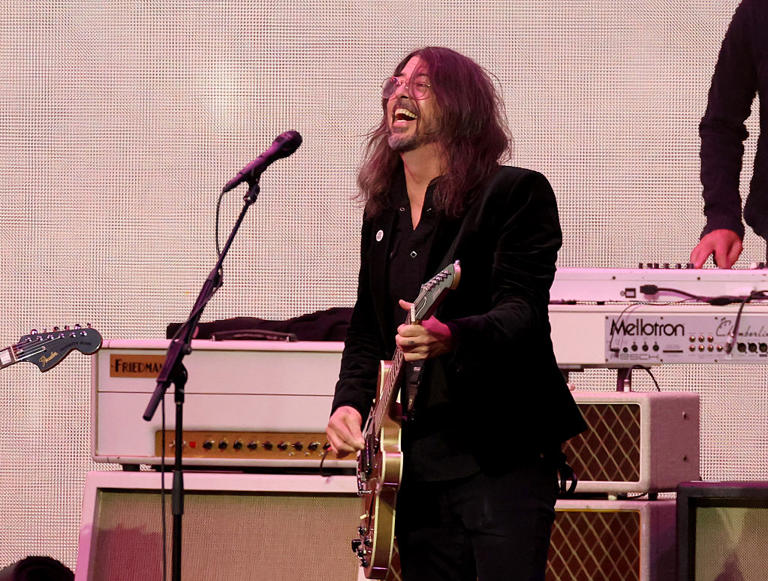
The Foo Fighters didn’t just play a show—they redefined one. Their debut performance on SNL UK wasn’t a nostalgic victory lap. It was a statement: raw, cinematic, and deliberately layered. For the first time, they performed “Caught in the Echo” live, pairing it with an unexpected narrative device—a child actor appearing mid-set—that left audiences dissecting its meaning within minutes. This wasn’t just a concert moment. It was theater wrapped in distortion and drum fills.
Most live debuts are about sound. This one was about story.
Why This Performance Felt Different
Live premieres are nothing new for bands of the Foo Fighters’ stature. But this wasn’t an arena tour opener or a festival headline slot. SNL UK—a format rooted in brevity and cultural commentary—forced a tighter, more intentional presentation. There were no extended solos, no crowd singalongs. Instead, the band leaned into atmosphere.
“Caught in the Echo” had circulated in demo form for months—recorded during late-night sessions in a converted Vermont barn. Leaked fragments hinted at vulnerability, a departure from the usual anthemic surge of tracks like “The Pretender” or “All My Life.” But hearing it live, in a single unedited take, changed the perception. The track’s reverb-drenched guitar lines and Dave Grohl’s restrained vocal delivery created a sense of isolation. And then—without warning—a young boy stepped onto the stage.
The Child Actor: A Narrative Gamble That Paid Off
Midway through the song, as the second verse faded into a haunting ambient bridge, a child—no older than ten—entered from stage left. Dressed in a replica of Grohl’s early 2000s stage outfit, he walked slowly to center stage, sat cross-legged, and watched the band with solemn focus. No dialogue. No interaction. Just presence.
Social media erupted. “Is that young Dave?” one fan asked. “Symbolism of lost youth?” guessed another. The band offered no immediate explanation, but the visual resonance was immediate.
Grohl later confirmed in a BBC Radio 1 interview that the boy—actor Leo Finnerty—was cast deliberately. “We wanted to show the weight of memory,” Grohl said. “Not just perform a song, but make you feel its origin. That kid isn’t me. But he’s the echo—the version of me that still lives in the songs.”
It was a rare moment of artistic risk in a mainstream broadcast setting. Most musical guests stick to playing well-known hits or promoting radio-ready singles. The Foo Fighters introduced a new song and a conceptual layer, trusting the audience to connect the dots.
"Caught in the Echo": Anatomy of a Hidden Track
While the visuals captivated, the music itself demanded attention. “Caught in the Echo” runs just under four minutes but unfolds like a memory replaying in slow motion. Structurally, it’s built on three key elements:
- A descending guitar motif reminiscent of In Utero-era Nirvana
- Layered vocal harmonies filtered through vintage tape echo
- A rhythm section that holds back, creating tension rather than release
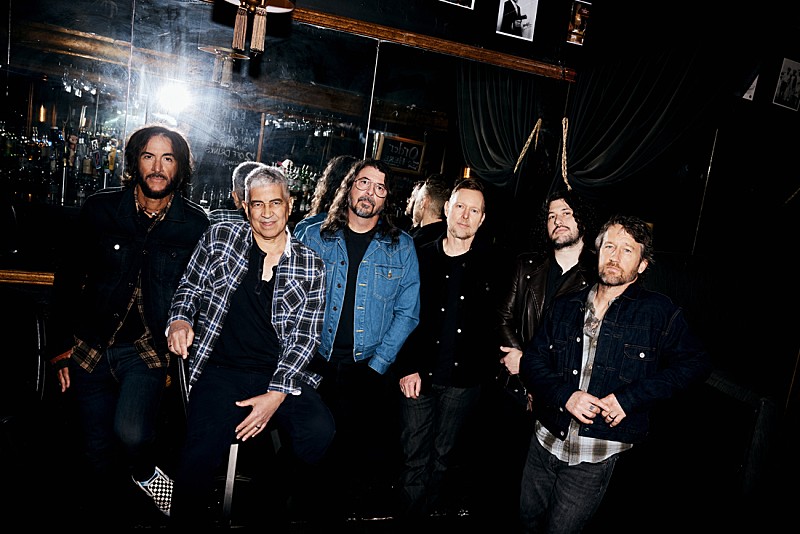
Lyrically, the song circles around absence. Lines like “I called your name, but the house was full of static” and “You left a shadow where the light used to stand” suggest grief, unresolved loss. Fans quickly noted parallels to Grohl’s own history—his father’s death during his adolescence, the loss of Taylor Hawkins, the impermanence he’s often sung about indirectly.
But unlike “Ballad of the Beaconsfield Miners” or “Miracle,” this wasn’t a tribute wrapped in metaphor. It felt personal. Confessional.
Behind the Scenes: Rehearsals, Timing, and Broadcast Limits
Pulling this off on SNL UK wasn’t simple. The show, modeled after Saturday Night Live but tailored for British audiences, gives musical acts only two performance slots—typically one single and one deeper cut. The Foo Fighters negotiated for full creative control, a rare ask.
Rehearsals were tense. The child actor had to sync his entrance with a specific line—“and I still hear you in the wiring”—to maximize emotional impact. Lighting, camera angles, and audio bleed were all recalibrated to support the moment. One misstep could have turned symbolism into awkwardness.
“It was a one-take situation,” recalled stage director Mira Cho in a NME behind-the-scenes feature. “If the camera missed the boy’s expression when Dave sang ‘you were ten years old and already gone,’ the whole thing collapses. We did eight run-throughs just to get the timing right.”
How Fans Reacted—and What They Missed
Within two hours of the broadcast, #CaughtInTheEcho and #FooSNLUK trended globally. Reaction videos flooded YouTube. Reddit threads dissected every frame. But amid the noise, some deeper details were overlooked.
First: the guitar Grohl played was not his usual custom Telecaster. It was a 1976 Harmony H78—cheap, semi-hollow, prone to feedback. He used it deliberately. “It doesn’t stay in tune,” he admitted later. “But it feels like memory—fuzzy, unreliable, emotional.”
Second: the child actor didn’t lip-sync or mime. He was fed a live audio feed of Grohl’s vocal track through an earpiece, allowing him to react in real time. This subtle detail kept the performance from feeling staged or artificial.
Third: the final chord didn’t cut cleanly. It faded into six seconds of room tone—the faint hum of studio lights, a distant cough, the creak of a floorboard. The broadcast didn’t clean it up. It was left in. A quiet insistence: this moment was real.
Comparing This to Other Foo Fighters TV Debuts
The Foo Fighters have debuted songs on major platforms before. “Run” premiered on The Late Show with Stephen Colbert. “Walk” first aired during a Super Bowl promo. But those were promotional—energetic, loud, designed for virality.
This was different in tone and intention:
| Performance | Song | Platform | Intent |
|---|---|---|---|
| “Run” | The Late Show | Colbert | Energy, hype |
| “Something from Nothing” | SNL US | Weekend Update backdrop | Humor, surprise |
| “Rescued” | Grammys | Awards show | Tribute, catharsis |
| “Caught in the Echo” | SNL UK | Live narrative debut | Emotional depth, concept |
“Caught in the Echo” stands out because it didn’t just introduce a song. It introduced an experience. The band didn’t play to the audience—they played for the silence afterward.
The Broader Impact: Redefining the TV Performance
Television music performances have long been seen as secondary—lesser than live tours or album drops. But moments like this prove their potential for cultural weight.
Consider Radiohead’s Later… with Jools Holland "Paranoid Android" performance—fragmented, eerie, era-defining. Or Beyoncé’s Homecoming HBO special, which transcended concert film to become social commentary. The Foo Fighters’ SNL UK appearance belongs in that lineage.
They used limited runtime, broadcast constraints, and live unpredictability not as obstacles—but as tools. The child actor wasn’t a gimmick. He was an anchor. He made the song’s emotional core visible.
What This Means for the Upcoming Album
“Caught in the Echo” is expected to appear on the band’s next full-length release, tentatively titled Echo Drive. Leaked studio notes suggest the album explores memory, legacy, and the distortion of time—themes echoed (appropriately) in the performance.
If this single is any indication, the album will be their most introspective since The Colour and the Shape. Early session reports mention contributions from string arrangers, field recordings, and even spoken-word passages from Grohl’s childhood home recordings.
And yes—Leo Finnerty is rumored to appear again, in audio form.
Closing: Why This Moment Matters
Not every live debut changes how we see a band. Most are promotional checkboxes—completed, forgotten. But the Foo Fighters’ SNL UK performance of “Caught in the Echo,” with its quiet child actor and unflinching vulnerability, did more than premiere a song.
It reminded us that rock music, at its best, isn’t just noise. It’s memory. It’s presence. It’s the echo of someone we’ve lost—still breathing in the wiring.
If you missed it, watch it again. Not for the riffs, but for the silence between them. That’s where the truth lives.
FAQ
Why did the Foo Fighters choose SNL UK for the live debut? They wanted a format with narrative freedom and a receptive rock audience. SNL UK offered creative control rare in mainstream TV.
Who is the child actor in the performance? Leo Finnerty, a young British actor with prior work in indie films. He was cast for his expressive stillness, not resemblance to Grohl.
Is “Caught in the Echo” available on streaming platforms? Yes, released as a single the day after the broadcast, with the live version as a B-side.
Did the band interact with the child actor during the song? No—no physical or verbal interaction. The power came from the contrast between performance and presence.
What inspired the song “Caught in the Echo”? While not officially confirmed, lyrics and interviews suggest it deals with childhood loss and the persistence of memory.
Was the child actor’s audio live or pre-recorded? He received a live vocal feed through an earpiece, allowing authentic real-time reactions.
Will this performance be part of a documentary? Rumors suggest behind-the-scenes footage may accompany the upcoming album release.
FAQ
What should you look for in Foo Fighters' SNL UK Debut: 'Caught in the Echo' and Child Actor Moment? Focus on relevance, practical value, and how well the solution matches real user intent.
Is Foo Fighters' SNL UK Debut: 'Caught in the Echo' and Child Actor Moment suitable for beginners? That depends on the workflow, but a clear step-by-step approach usually makes it easier to start.
How do you compare options around Foo Fighters' SNL UK Debut: 'Caught in the Echo' and Child Actor Moment? Compare features, trust signals, limitations, pricing, and ease of implementation.
What mistakes should you avoid? Avoid generic choices, weak validation, and decisions based only on marketing claims.
What is the next best step? Shortlist the most relevant options, validate them quickly, and refine from real-world results.