
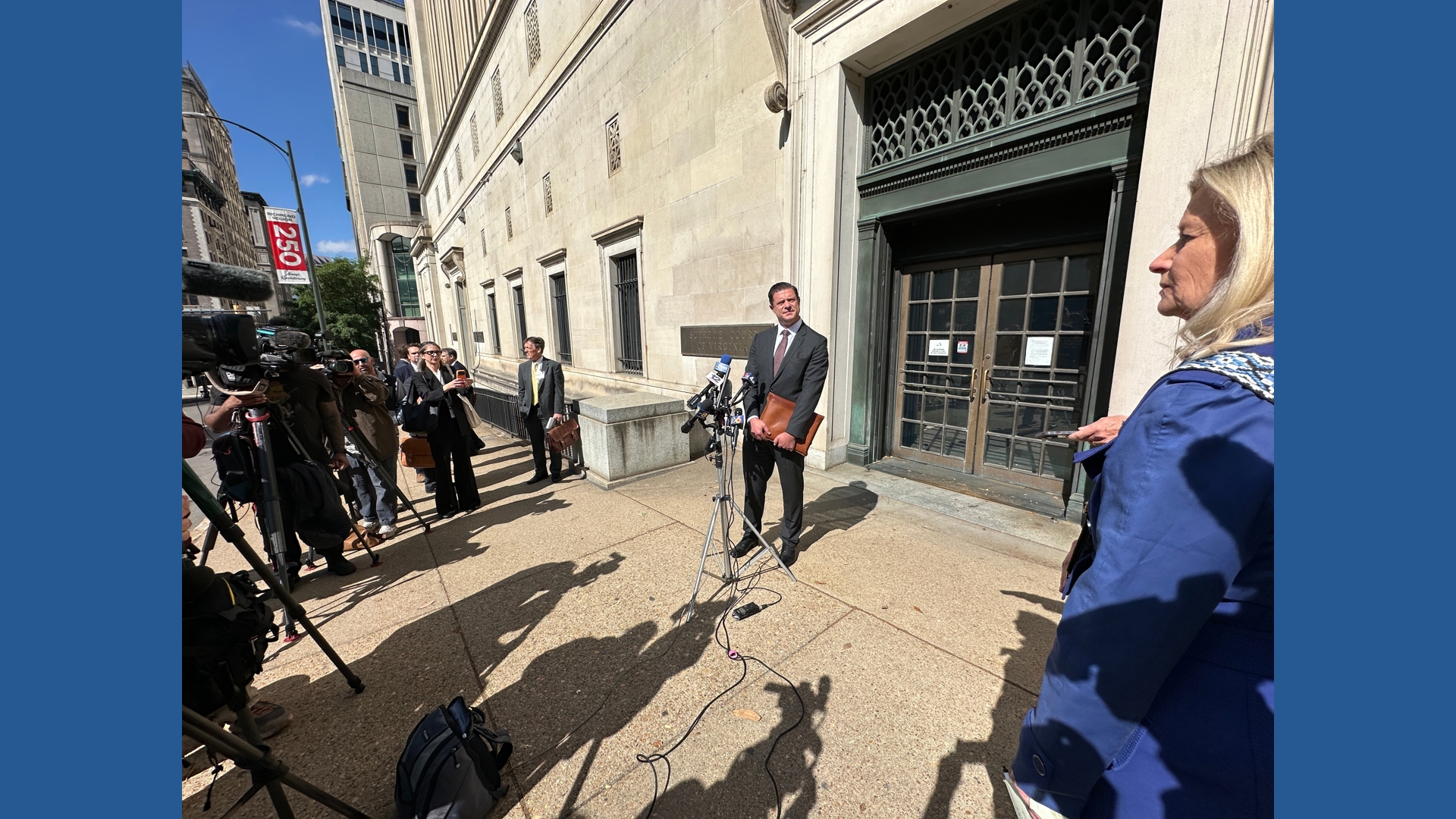
Virginia’s highest court is at a crossroads. The Virginia Supreme Court is currently considering whether to block a voter-approved congressional map that tilts in favor of Democrats—a decision with sweeping implications for democracy, judicial power, and electoral fairness. What makes this moment unique isn’t just the political stakes, but the fact that the map in question emerged from a constitutional amendment passed directly by voters, not politicians. Now, the judiciary must decide: can it override the will of the electorate in the name of legal or constitutional standards?
This case cuts to the core of modern American governance—where voter initiatives collide with judicial interpretation, and where the lines between fair representation and partisan advantage blur.
The Origins of the Voter-Approved Map
In 2020, Virginia voters approved a constitutional amendment creating an independent redistricting commission. The goal was clear: end decades of gerrymandering by taking map-drawing power out of the hands of the state legislature. The commission, composed of eight lawmakers and eight citizens, was tasked with producing balanced, nonpartisan congressional and legislative maps.
But the process faltered. The bipartisan commission deadlocked along party lines, unable to agree on a final map. Under the amendment’s fallback provisions, the task defaulted to the Virginia Supreme Court—an unusual delegation of redistricting authority to the judiciary.
In 2021, the court appointed a special master, Dr. Michael Patrick McDonald, a nonpartisan political scientist, to draw the maps. His congressional plan, finalized and implemented, resulted in a 5–5 partisan split in Virginia’s 11 U.S. House seats—despite Democrats winning the statewide popular vote in recent federal elections by double digits.
Fast forward to 2023, and a new constitutional amendment passed by voters again reshaped the process—this time mandating that if the commission fails, the state Supreme Court must select from among the citizen members’ proposed maps. One of those, favored by Democratic-leaning voters and organizations, produced a map with seven likely Democratic seats and four likely Republican ones.
This new map—approved under the updated constitutional framework—has now triggered a legal challenge from Republican lawmakers and conservative advocacy groups, arguing that it violates the state constitution’s requirement for “geographic compactness” and “contiguous districts,” and potentially federal equal protection standards.
Why the Court’s Decision Matters
At stake is more than just who controls Virginia’s congressional delegation. The court’s ruling will signal how much deference voter initiatives receive when they clash with judicial interpretations of constitutional limits.
If the court blocks the map, it risks being seen as substituting its judgment for that of the electorate—especially given that the process followed the amended constitution to the letter. Critics argue this would undermine democratic legitimacy and set a dangerous precedent: that courts can invalidate outcomes simply because they dislike the political tilt—even when the rules were followed.
Conversely, if the court upholds the map, it may be accused of endorsing partisan gerrymandering under the guise of populism. Opponents claim the boundaries stretch common sense—linking distant urban centers with rural areas through narrow corridors, violating community cohesion.
One contested district stretches from Arlington County near Washington, D.C., down to Richmond, absorbing pockets of Democratic voters along I-95. Critics call it a “highway district,” engineered for partisan gain. Supporters counter that it reflects demographic and economic continuity across central Virginia.
Legal Grounds for the Challenge
The petitioners argue the map violates several provisions of the Virginia Constitution:
- Article II, Section 6: Requires districts be “bounded by natural or artificial barriers” and “contiguous.”
- Article II, Section 8: Mandates districts be “compact” and preserve “localities and political subdivisions” where possible.
- Equal Protection Clause (14th Amendment): Alleges vote dilution in Republican-leaning areas.
They cite examples where districts zigzag across county lines, split cities like Lynchburg and Roanoke, and connect non-adjacent areas via slivers of road or waterway. In one case, a district includes parts of five different counties and three independent cities—none of which fully lie within the boundary.
The respondents—defending the map—counter that “compactness” is subjective, and that modern redistricting must account for demographic shifts, the Voting Rights Act, and the need to create minority-opportunity districts. They emphasize that the map was drawn not by legislators, but by citizen commissioners, and approved under a process ratified by voters.
They also point to precedent: in 2021, the same court accepted a congressional map with similar geographic irregularities, suggesting inconsistency if the current map is struck down.
The Role of Partisanship in Judicial Review
The Virginia Supreme Court’s composition adds another layer of complexity. Once dominated by Republican appointees, the court now has a narrow Democratic majority following recent judicial elections and gubernatorial appointments. This shift has fueled accusations—fair or not—that the court’s decision could be politically influenced.
Historically, Virginia’s courts avoided redistricting battles, leaving them to the legislature. But the 2020 amendment changed that, thrusting judges into the political arena. Now, they’re being asked to referee a process they didn’t design, using standards that are often vague.
Legal scholars note the irony: an effort to reduce partisanship in redistricting has instead intensified scrutiny of judicial partisanship.
“The court is in a no-win position,” says Dr. Laura Jenkins, a University of Richmond constitutional law professor. “If they block the map, they’re overturning voter will. If they uphold it, they’re enabling a Democratic advantage. But their duty isn’t to balance politics—it’s to interpret the constitution. The danger is that public trust erodes no matter the outcome.”
Precedents and National Implications
Virginia’s case echoes battles in other states where courts have intervened in redistricting. In North Carolina and Pennsylvania, state courts have struck down maps for partisan gerrymandering, only to see reversals or political backlash.
But Virginia’s situation is distinct because the map stems from a voter mandate, not legislative manipulation. That distinction could shield it from invalidation—or invite even greater scrutiny, depending on how the court weighs democratic participation against constitutional fidelity.
Nationally, the outcome could influence how other states structure their redistricting reforms. If Virginia’s court blocks a citizen-drawn, voter-authorized map, it could chill similar initiatives in states like Michigan, Ohio, or Colorado, where independent commissions operate under threat of judicial override.
Conversely, upholding the map might embolden reformers—but also invite federal intervention, especially if Republican leaders appeal to the U.S. Supreme Court on equal protection grounds.

Practical Consequences for Voters and Candidates
Regardless of the legal arguments, the real-world impact is immediate. If the court blocks the map, it would trigger a scramble to redraw districts ahead of the next election cycle—potentially displacing candidates already campaigning, confusing voters, and increasing election costs.
Local parties have already begun organizing around the current districts. Incumbents are assessing re-election odds. Donors are allocating resources. A last-minute change could upend months of planning.
Moreover, voter confusion is a serious concern. Residents may find themselves in new districts with different representatives, polling places, and campaign dynamics—especially in areas where boundaries shift mid-cycle.
One Loudoun County resident described receiving campaign mailers for two different congressional candidates—each claiming her zip code. “I just want to know who represents me,” she said. “It’s hard to feel connected when the lines keep moving.”
What a Balanced Map Might Look Like
Critics of the current map don’t necessarily want a Republican advantage—they want fairness. A balanced approach might prioritize:
- Respecting county and city boundaries where possible
- Minimizing district splits (e.g., not dividing cities like Charlottesville or Harrisonburg)
- Ensuring geographic coherence—districts should feel like communities, not political puzzles
- Preserving minority representation without over-concentration
Some experts suggest a hybrid model: use algorithms to generate hundreds of neutral maps based on objective criteria (compactness, continuity, population equality), then apply community input to refine them.
For example, a nonpartisan group at Virginia Tech ran such a simulation, producing a range of maps with a 6–5 Democratic edge—less skewed than the current proposal, but still reflective of statewide voting patterns.
Such methods won’t eliminate partisanship, but they can reduce the appearance of manipulation.
The Path Forward
The Virginia Supreme Court’s decision will ultimately hinge on how it interprets the constitution—not political preferences. But the ruling will be read through a political lens, no matter how narrowly legal the reasoning.
If the court upholds the map, it affirms that voter-driven processes can yield maps with partisan outcomes—so long as procedures are followed. If it blocks the map, it asserts that constitutional guardrails matter more than procedural compliance.
Either way, the message to reformers is clear: redistricting reform doesn’t end with a ballot measure. It requires ongoing vigilance, clear standards, and institutions that can enforce them without eroding public trust.
For Virginia voters, the takeaway is this: your voice matters, but it’s not the final word. The courts remain the ultimate arbiters—not because they’re flawless, but because the system demands a check on power, even democratic power.
The decision is expected within months. When it comes, it will shape not only Virginia’s representation in Congress but also the future of how Americans draw the lines of democracy.
Common Mistakes in Redistricting Advocacy - Assuming voter-approved = automatically legal - Ignoring geographic and demographic realities in favor of partisan outcomes - Failing to engage communities during the drafting process - Over-relying on single metrics (e.g. “compactness”) without context - Delaying legal challenges until after maps are implemented
Workflow Tip for Reformers Combine technical analysis (GIS mapping, demographic data) with public hearings in diverse regions. Use draft maps as conversation starters—not final products. Transparency builds legitimacy.
FAQ
What should you look for in Virginia Supreme Court Weighs Fate of Voter-Approved House Map? Focus on relevance, practical value, and how well the solution matches real user intent.
Is Virginia Supreme Court Weighs Fate of Voter-Approved House Map suitable for beginners? That depends on the workflow, but a clear step-by-step approach usually makes it easier to start.
How do you compare options around Virginia Supreme Court Weighs Fate of Voter-Approved House Map? Compare features, trust signals, limitations, pricing, and ease of implementation.
What mistakes should you avoid? Avoid generic choices, weak validation, and decisions based only on marketing claims.
What is the next best step? Shortlist the most relevant options, validate them quickly, and refine from real-world results.